Parfait, j’ai toutes les données. Le sujet qui va générer le maximum de trafic en ce moment est clairement :
“Why Millions of Americans Are Cancelling Cable in 2026” — le cord-cutting est un sujet massif, avec des chiffres explosifs, et il cible exactement les personnes qui cherchent une alternative → votre service IPTV.
Voici l’article complet, copier-coller direct :
TITRE :
Why Millions of Americans Are Finally Cancelling Cable in 2026 — And What They’re Watching Instead
[INTRODUCTION]
I have a neighbor — mid-50s, retired teacher, not exactly what you’d call a tech person — who called me last month to ask how to cancel her Comcast subscription. She’d been paying $143 a month for cable for over a decade. Same package, same channels, same remote control that always seemed to lose signal at the worst possible moment.
What finally pushed her over the edge wasn’t a new streaming app or a friend’s recommendation. It was her cable bill going up — again — by $18, with no explanation and no warning. She called to cancel, sat on hold for 40 minutes, and when someone finally answered, they offered her a $10 discount to stay. She said no.
She’s not alone. Not even close.
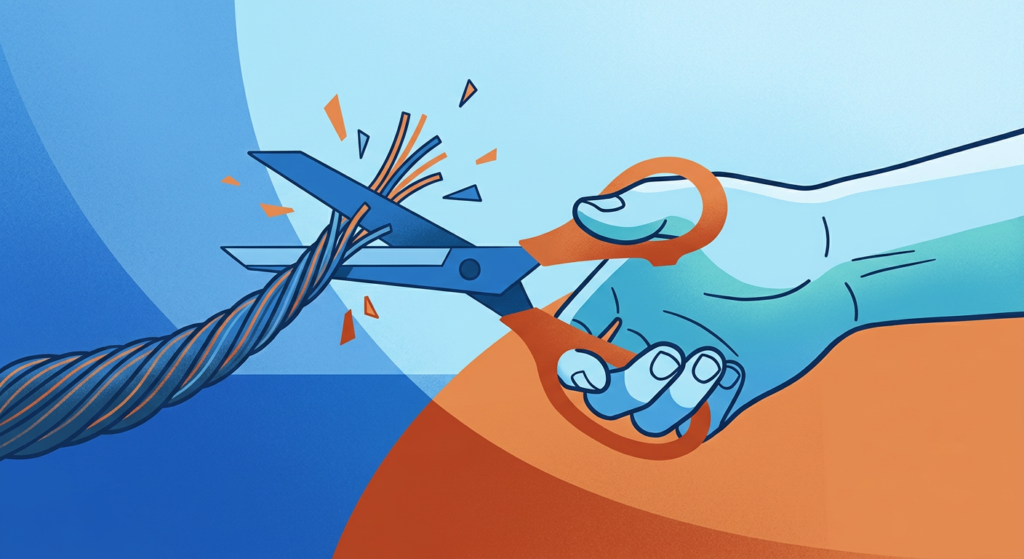
The Numbers Don’t Lie: Cable Is Losing America
By the end of 2026, an estimated 80.7 million U.S. households will have abandoned traditional pay TV, leaving only 54.3 million homes with cable or satellite subscriptions. Let that sink in for a second. That’s not a niche trend or a tech-savvy minority making a lifestyle choice. That’s a full-scale exodus. Apprupt
Streaming now commands 47.5% of all U.S. TV viewing time — a record high — while cable has plummeted to 20.2%, its lowest share ever. Apprupt
Since 2021, about 5 million people have cut the cord annually. Year after year, without fail. Rain or shine, recession or boom — Americans keep cancelling cable at a steady, unstoppable pace. Zippia
And the generational shift is even more dramatic. 45% of U.S. adults have never subscribed to cable or satellite TV at all. For a huge portion of the country, cable was never part of the plan. They grew up on YouTube, Netflix, and streaming — and they never saw a reason to go backward. Zippia
So Why Is This Happening Now, More Than Ever?
You’d think this would have happened sooner. Streaming has been around since 2007. Netflix mailed DVDs before most people had smartphones. But the cord-cutting movement didn’t really explode until recently — and there are three very specific reasons for that.
1. Cable prices became genuinely insulting
86.7% of people reported cutting the cord due to the high price. Not content. Not quality. Not convenience. Price. Cable companies spent years quietly adding fees, jacking up rates after promotional periods expired, and bundling channels nobody watches into packages people couldn’t opt out of. At some point, paying $130 a month to watch six channels you actually like stopped making any sense. Evoca
2. The alternatives finally got good enough
This is the part that changed everything. For years, the knock against cutting the cord was live sports and local news — two things streaming genuinely couldn’t replace. That’s no longer true. Between IPTV services, live TV apps, and dedicated sports streaming platforms, there’s almost nothing you can watch on cable that you can’t find elsewhere, usually cheaper.
3. Broadband got better — and cheaper
Cord-cutting runs on a solid internet connection. In 2026, most top-tier IPTV services use advanced streaming technology bringing latency down to 2–4 seconds — fast enough that watching live sports, breaking news, or a live concert over the internet is practically indistinguishable from cable. The infrastructure finally caught up to the demand. Scmp
Who Is Actually Cutting the Cord?
Here’s what surprises most people: this is no longer just a young person’s game.
The average cord-cutter is currently between 35 and 55 years old, indicating the trend has firmly moved beyond younger demographics into middle-aged households. Among those most likely to cancel cable within the next 12 months, the 35–54 age group shows the highest intent. Apprupt
My neighbor, the retired teacher? She’s exactly the demographic cable companies thought they’d keep forever. Loyal, habitual, not particularly motivated to change. But even she hit a breaking point. When your most reliable customer segment starts walking out the door, the business model is in serious trouble.
Only 34.4% of U.S. households still have pay-TV in Q1 2026. The majority of America has already made the switch. If you’re still paying a cable bill, you’re now in the minority. Adwave
What Are They Actually Watching Instead?
This is the question cable companies hoped nobody would ask, because the honest answer makes their product look unnecessary.
Cord-cutters are not giving up television. They’re watching more of it, on their own terms. The combination most households land on looks something like this:
One or two on-demand services (Netflix, Disney+, Max) for movies and series — roughly $15–$30 total per month depending on which ones you choose.
A live TV solution for sports, news, and events — this is where IPTV comes in. The shift toward IPTV in the United States has been steady for years, but 2026 represents a more mature phase of the trend. Cord-cutting has continued to expand, smart TVs are now standard in most American households, and broadband infrastructure has improved across both urban and rural areas. Geek Vibes Nation
A good IPTV subscription gives you live channels — local news, sports networks, international feeds, everything — for a fraction of what cable charges. Traditional cable services can cost $80–$150 per month, while IPTV services offer similar or better content at a fraction of the price. MEXC
Add it all up and the average cord-cutter is spending $30–$50 a month on entertainment versus $120–$160 for cable. That’s real money — over $1,000 a year back in your pocket.
The Live Sports Problem — Solved
The one argument cable loyalists have clung to for years is live sports. And honestly, for a while, it was a fair point. Regional sports networks, playoff coverage, the sheer volume of games across NFL, NBA, MLB, NHL — cable had that locked up.
Not anymore.
IPTV services now carry every major US sports network plus international sports channels, including NFL, NBA, MLB, NHL, MLS, UFC and boxing PPV events, Premier League, La Liga, Serie A, and Champions League. Indie Hackers
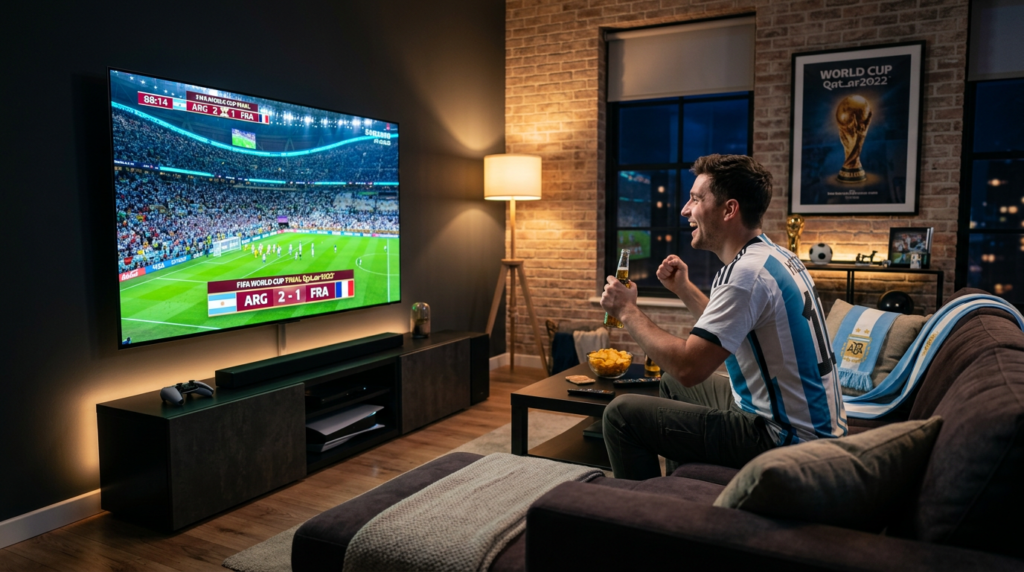
And with the 2026 FIFA World Cup currently underway across the United States, Canada, and Mexico, the timing couldn’t be more relevant. Every single match — all 104 of them — is accessible through quality IPTV services, often in multiple languages and from multiple international broadcast feeds. That’s something cable, with its fixed channel lineup, simply cannot match.
What to Look for When You Make the Switch
If you’re in the 34% of households still paying for cable and you’re starting to do the math, here’s what actually matters when you start evaluating alternatives.
Internet speed first. Everything else depends on this. You want at least 25 Mbps for comfortable 4K streaming, and ideally a wired Ethernet connection for live events. If your broadband is solid, you’re ready.
A free trial before you commit. Any reputable IPTV service will let you test before you pay. Use it specifically on a live sports or news channel during evening hours — that’s when servers are under real load. If it handles that smoothly, you’re in good shape.
Check the channel list carefully. Make sure the specific channels you care about — local news, your sports teams’ networks, any international channels — are included and clearly labeled.
Device compatibility. Firestick and Android TV boxes are the most widely supported and the cheapest entry point. If you already own one, you’re halfway there.
The Bottom Line
The cable industry is not dying slowly. It’s losing 5 million households a year, its best customers are starting to leave, and 76% of U.S. homes are projected to be cord-free by 2027. Apprupt
My neighbor figured it out after one too many unexplained price increases. She pays $22 a month now for a service that gives her more channels than she ever had on cable, including live sports and international news. She called me last week, not to ask for help — just to say she wished she’d done it three years ago.
If you’re still on the fence, the math has already made the decision for you. The question is just how long you’re willing to keep paying for it.
Frequently Asked Questions
Why are so many Americans cancelling cable in 2026?
The main driver is price. Studies consistently show that high cost is the number one reason people cancel — not dissatisfaction with content. When cable bills regularly exceed $120–$150 per month while streaming alternatives offer comparable content for under $50 combined, the decision becomes straightforward.
Is IPTV a good replacement for cable TV?
For most households, yes. IPTV provides live channels — including sports, news, and international content — over the internet at a fraction of cable’s cost. The key is choosing a provider with stable servers and a channel lineup that matches what you actually watch.
What do I need to cut the cord?
A reliable internet connection (25 Mbps or faster), a smart TV or streaming device like a Firestick or Android TV box, and a combination of streaming services that covers your viewing habits. Most cord-cutters spend $30–$50 per month total.
Will I miss anything by cancelling cable?
The most common concern is live sports and local news. Both are available through IPTV services and live TV streaming apps. The gap between cable and streaming alternatives for live content has closed significantly in 2025 and 2026.
How much money can I save by cutting the cord?
The average cable bill in the US runs between $100 and $160 per month. Most cord-cutters report spending $30–$50 on streaming replacements — a saving of $70 to $120 per month, or roughly $1,000–$1,400 per year.